Karma: From Habit to Freedom
January 30 - February 6, 2027

Karma is often understood simply as cause and effect, but Buddhist teachings offer a much more intimate understanding of how karma operates in our lives. Our intentions, perceptions, emotions, habits, and actions continually create causes and conditions for what comes next. In this week-long meditation retreat, we will explore karma not as fate or punishment, but as a dynamic process that unfolds moment by moment. Growing awareness is the key to transforming our lives and working more effectively with our inputs.
A central focus will be the kleshas, the habitual mental afflictions that cloud awareness and propel us into karmic patterns. Traditionally these include craving and attachment, aversion and anger, ignorance and confusion, pride, jealousy, and other forms of grasping. Rather than trying to suppress difficult emotions or regard them as problems to eliminate, Buddhist practice teaches us to meet them with awareness, curiosity, compassion, and insight. Through meditation and contemplation, we will explore how an emotion arises, what conditions support it, how we habitually respond to it, and what becomes possible when we create space around it. Drawing from Theravada, Mahayana, and Vajrayana Buddhist approaches, the retreat will move from recognizing our conditioning toward transforming it. This allows us to discover the freedom that becomes possible when we no longer have to act out every thought, feeling, or impulse.
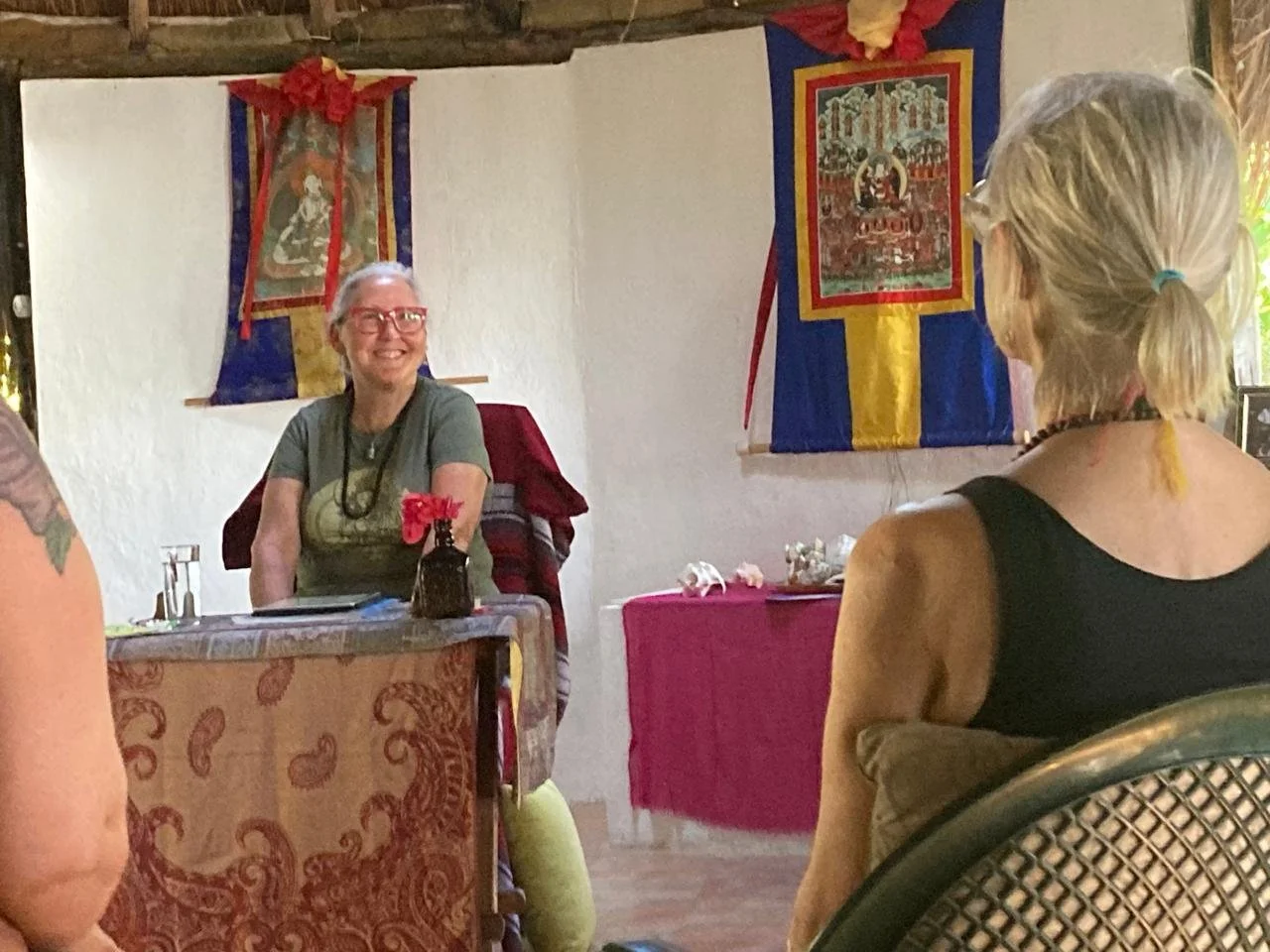
The teachings are offered on the ancient basis of Dana, also known as "give from the heart" or "pay what you choose." The teacher does not receive payment from the retreat centre. This allows you to pay according to your heart, and to pay what you value. Dana for Lama Linda can be sent by e-transfer to dana@awakenintoronto.org or by PayPal to https://paypal.me/awakeningintoronto
Meet the Instructor
-

Lama Linda
Lama Linda (Linda Hochstetler) has studied both mindfulness meditation and Vajrayana Buddhism for more than a quarter century. She trained in mindfulness meditation with Jon Kabat-Zinn in the 90s and studied under Namgyal Rinpoche (the first Canadian-born Rinpoche) from 1995 until his death in 2003. She has received permission to teach in the Namgyal lineage and studied Vajrayana Buddhism with Qapel (Doug Duncan) who is the founder of Clear Sky Meditation and Retreat Centre in Cranbrook, BC. Lama Linda is a registered social worker with a specialty in illness, dying and death. Along with a thriving private practice she has written and been interviewed on the subject of dying and death. In 2021 she authored her first book - 21 Days to Die: The Canadian Guide to End of Life. She loves to weave together her Buddhist practices with Western psychotherapeutic practices to help students make transformative changes in their lives. www.lindahochstetler.com.
Accommodations & Rates
Our retreats are available at a sliding scale. We invite you to practice economic solidarity with your community and choose the ticket tier that makes the most sense with your financial situation. Explanations of the pricing tiers can be seen on our reservations page. All prices are in USD. Work bursaries are available.
General - $1290
Sustainable - $1140
Solidarity - $1015
The retreat cost includes the following:
7 nights accommodation based on double occupancy
All Meals at Xo Ki’in Retreat Center
Bird watching tour
Boat tour in the Sian Ka’an Biosphere Reserve
This retreat fee does not include Dana
For further information and payment please send an email to info@xokiin.com
What is Dana?
Dana is a Sanskrit word that means “donation” or “yoga of generosity”. In the Buddhist tradition, teachings are given freely so that anyone, no matter their financial means can attend classes. Each time one receives teachings, it is an opportunity to consciously practice generosity. Giving money and other means of support expresses gratitude and support to the teacher and helps to ensure that these teachings continue.
Each person receiving teachings determines the amount of Dana according to one’s heart and one’s financial means. When deciding how much to offer, one should think about what these teachings mean to you and try to give accordingly.